Play does not stop being valuable when we become adults.
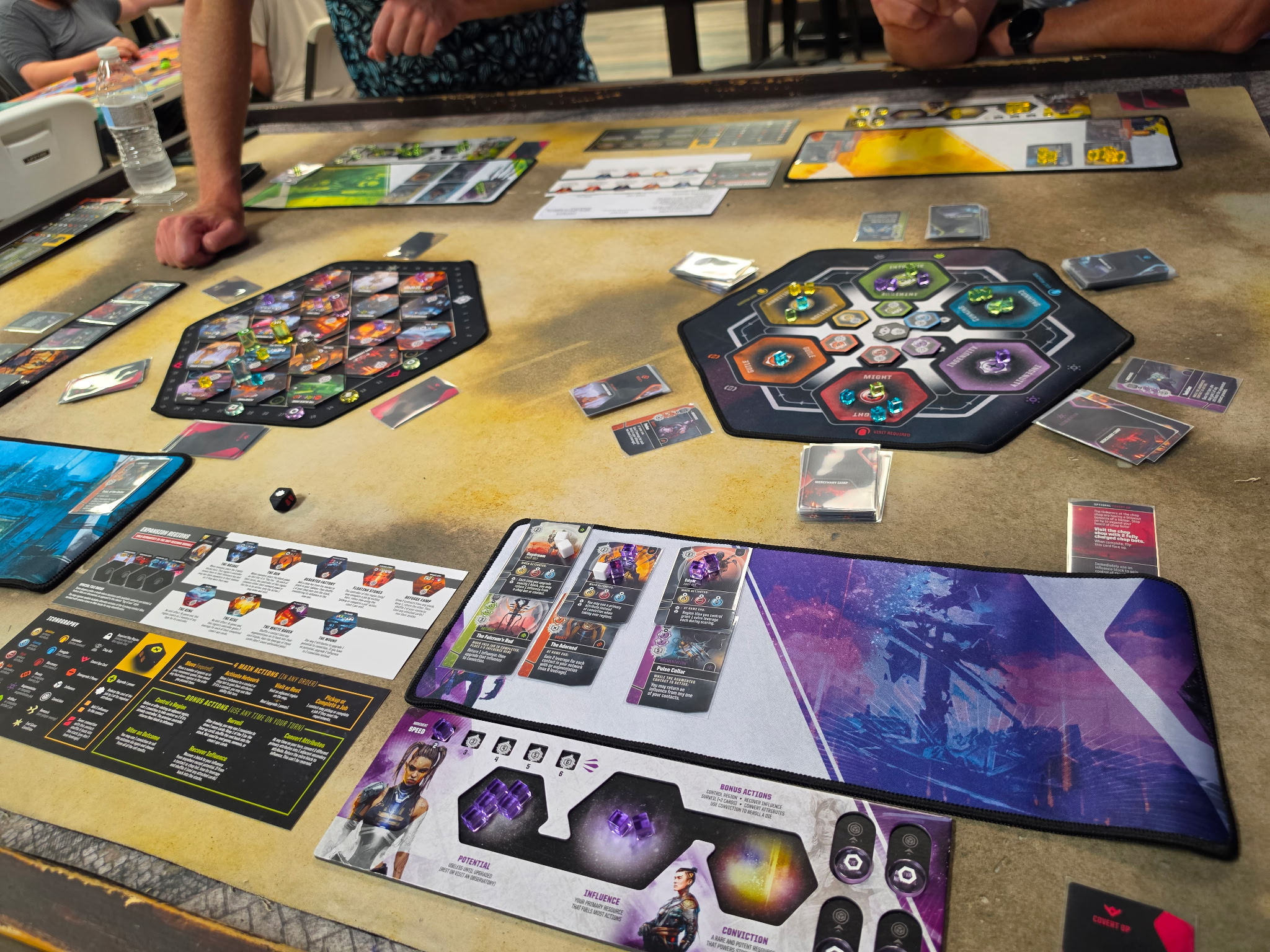
The Play Theory Project recently explored this idea through two adult gaming sessions featuring Vestige, a modern strategy board game. We first played the game with a small group of adults in West Philadelphia, then brought it to the Phoenixville Board Game weekly meetup at Palladium Games in Phoenixville, Pennsylvania.
At the Phoenixville meetup, four adults joined our game of Vestige, while approximately 15 adults attended the overall gathering and played a variety of tabletop games throughout the evening.
More Than Playing a Game
Vestige asks players to make choices, manage resources, respond to changing circumstances, and adjust their plans based on what happens around the table.
In doing so, players engage many of the skills associated with social and emotional learning (SEL): communication, patience, responsible decision-making, adaptability, perspective-taking, and emotional regulation.
SEL is often associated with children and schools, but these skills remain important throughout adulthood. Games provide an engaging setting where adults can practice them through actual interaction with other people.
A Place Where It Is Okay to Lose
Board games also provide something valuable: low-stakes competition.
Players can care about winning while knowing that losing carries few consequences. A strategy can fail. Someone else can make the better move. You can be disappointed with the outcome, congratulate the winner, and still enjoy the experience.
These moments provide opportunities to manage frustration, recognize another person’s success, reflect on your own decisions, and practice good sportsmanship. Winning also calls for humility and respect.
A welcoming gaming environment creates room for adults to experience both sides of competition and become more comfortable with winning and losing well.
Creating Connections Around the Table
The Phoenixville meetup demonstrated how individual games can also contribute to a larger social experience. While four adults gathered around our Vestige table, approximately 15 people shared the space, forming smaller groups around different games.
This is one of the strengths of analog gaming. The game provides both a reason to gather and a structure for interacting once people arrive.
That makes tabletop gaming particularly useful in libraries, community organizations, educational institutions, game stores, senior programs, and other places where people come together.
Play Theory in Practice
For the Play Theory Project, these two sessions demonstrate a larger idea: analog games can be intentionally used to support social connection, personal development, and community participation throughout adulthood.
Our experience started with a small group in West Philadelphia and continued when we shared Vestige with another group in Phoenixville. Neither required a classroom or formal program. It required a game, a welcoming environment, and people willing to participate.
And that invitation is open to you.
You do not need to consider yourself a gamer or know the rules before you arrive. Whether you want to discover a new game, meet people, enjoy some friendly competition, or introduce analog play to your organization, there is room at the table. Come play with us