
By Lovell T. Harmon, Sr. | Play Theory Project
Four Sessions, No Victories, but Plenty of Reasons to Keep Playing
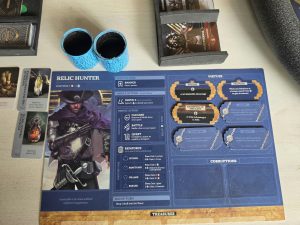
Over the past several months, I have been getting together with a small group of fellow board game enthusiasts from the Norristown Board Game Meetup to play Return to Dark Tower, a cooperative fantasy adventure game published by Restoration Games.
We meet about every six weeks, and after four separate gaming sessions, we still haven’t won a single game.
You might think that losing four times would discourage us from continuing. Interestingly, that has not been the case. Each session has been enjoyable, and we still look forward to our next chance to challenge the Tower.
What makes these gatherings particularly meaningful to me is the group itself. Most of us are over 60, and we come from different backgrounds, with different careers, experiences, and perspectives on life.
While we gather to play a board game, our time together involves much more than moving pieces and completing objectives. We talk about our families, share life experiences, exchange opinions, and enjoy spending time with people who have different perspectives.
The game gives us a reason to gather, but the relationships and conversations are just as important to the experience.
What Is Return to Dark Tower?
Return to Dark Tower is a modern reimagining and sequel to the original Dark Tower, released by Milton Bradley in 1981.
The original game was remarkable for its time because an electronic tower controlled many aspects of gameplay. Restoration Games brought the concept back in 2022 with a substantially redesigned game featuring modern components, detailed miniatures, an electronic tower, and an accompanying digital application.
The result is an immersive fantasy adventure in which players take on the roles of heroes attempting to protect a kingdom from an increasingly powerful evil.
Players travel across the board, gather resources, complete quests, battle enemies, and strengthen their characters in preparation for a final confrontation with the forces occupying the Dark Tower.
The electronic tower is particularly impressive. It responds to the game’s companion app, produces sounds and lighting effects, and periodically releases small skulls that can create additional problems for players.
As the game progresses, the threats become increasingly difficult to manage. Players must balance their immediate needs against the larger objective of preparing for the final confrontation.
And as our group has discovered, defeating the Tower is no easy task.
Understanding Cooperative Gaming
One reason I enjoy Return to Dark Tower is that it is a cooperative game, often called a co-op game.
In traditional competitive board games, players generally work against one another. Each player attempts to achieve a higher score, complete an objective first, or otherwise defeat the other participants.
Cooperative games take a different approach.
Instead of competing against one another, players work together to overcome challenges the game presents. Everyone shares a common objective, and the group generally succeeds or fails together.
In Return to Dark Tower, each player controls a hero with particular abilities and opportunities. While players make individual decisions, those decisions affect the entire group.
Success requires communication, coordination, resource management, and a willingness to consider other players’ needs.
For example, one player might want to pursue a quest that will strengthen their character, while another recognizes an immediate threat that could create problems for everyone. The group must discuss its options and determine which action best supports its shared objective.
Not everyone will agree.
That is part of what makes cooperative gaming interesting.
Players must listen to one another, explain their reasoning, evaluate alternatives, and sometimes set aside their preferred strategy for the group’s benefit.
Four Attempts and Still Learning
Our group has met four times to play Return to Dark Tower, and we still haven’t defeated the game.
Each session brings new challenges, and despite our growing familiarity with the rules and mechanics, we still find it hard to coordinate our decisions effectively.
Sometimes we focus too much attention on immediate threats. Other times, we may spend valuable resources on one problem while letting another develop.
We have also experienced situations where a strategy that initially appeared promising became less effective as the game progressed.
What I find particularly interesting is how we respond to these challenges.
Rather than getting frustrated with one another, we discuss what happened, consider alternatives, and think about what we might do differently next time.
We certainly want to win. After four unsuccessful attempts, defeating the Tower would be a satisfying accomplishment.
But winning has never been the main reason we keep meeting.
We enjoy the challenge, the conversations, and the opportunity to work together toward a common goal.
And perhaps that is one of the more valuable aspects of cooperative gaming.
Gaming, Friendship, and Life After 60
One of the things I appreciate most about this particular gaming group is the age and diversity of its members.
Most of us are over 60, and we bring decades of personal and professional experience to the table.
Those experiences shape how we approach the game and contribute to the conversations that take place throughout our sessions.
We share stories about our families, discuss events and experiences that have shaped our lives, and occasionally find ourselves talking about subjects that have little to do with the game in front of us.
I find these conversations just as enjoyable as the gameplay.
As people grow older, opportunities for regular social engagement can become increasingly important. Retirement, changes in employment, family responsibilities, and other life transitions can affect how often adults interact with people outside their immediate circles.
A board game meetup offers a structured yet informal way to maintain those connections.
The activity gives everyone a common purpose, while the relaxed environment creates opportunities for conversation and friendship.
I also appreciate that our different backgrounds contribute to the experience. Each person approaches problems differently, and those differences frequently lead to interesting discussions about the best way to proceed.
We may not always agree on the next move, but we respect one another’s perspectives and work toward a decision.
For me, that is a meaningful part of the experience.
The Value of Shared Problem-Solving
At the Play Theory Project, we explore how tabletop gaming can create opportunities to practice social, emotional, and cognitive skills.
Return to Dark Tower is a strong example because it requires players to work together under challenging conditions.
Several skills are particularly relevant.
Collaboration: Players must coordinate their actions and consider how individual decisions affect the entire group.
Communication: Successful cooperation requires players to explain their ideas, listen to others, and discuss possible approaches.
Problem-solving: The game regularly presents situations that require players to evaluate competing priorities and develop a response.
Cognitive flexibility: Strategies that appear effective early in the game may need to change as new threats emerge.
Emotional regulation: Losing can be frustrating, particularly after investing several hours in a game. Cooperative play provides opportunities to manage disappointment and respond constructively.
Perspective-taking: Players must consider others’ needs, abilities, and recommendations when making decisions.
These skills are relevant at any age.
For older adults, cooperative gaming may also offer opportunities for continued mental engagement and social interaction. Players must remember rules, evaluate information, consider alternatives, and participate in group discussions.
It is important not to assume that playing a board game automatically produces measurable improvements in cognitive functioning or emotional well-being. However, games like Return to Dark Tower create opportunities to engage these abilities.
For our group, the value is especially apparent in the discussions we have as we try to solve problems together.
A Modern Version Worth Experiencing
Another aspect of Return to Dark Tower that deserves attention is the quality of its production.
Restoration Games took a memorable early-1980s game and developed it into a far more elaborate modern experience.
The large electronic tower, detailed miniatures, illustrated board, and integration with a digital application create an impressive presentation.
The tower itself is central to the experience. Its sounds, lighting effects, and unexpected actions add tension as the game progresses. When the tower releases skulls or signals another development, everyone pays attention.
The game feels like a shared adventure, with the physical components and technology helping establish the atmosphere.
This level of production comes at a price.
Return to Dark Tower costs considerably more than many traditional board games, with the publisher listing the base game at about $199. Additional expansions and upgraded components can increase that investment.
For someone unfamiliar with modern hobby board games, that may seem like a substantial amount to spend on a single game.
However, having played the game multiple times, I believe the investment can be worthwhile for players who enjoy cooperative fantasy adventures and plan to play regularly.
The quality of the components, the variety of challenges, and the immersive experience provide considerable entertainment value.
In our case, the game has brought us together four times, and each gathering has provided several hours of enjoyment.
We’re still looking forward to playing again.
The Experience Matters More Than the Outcome
One of the most interesting things about our Return to Dark Tower sessions is that we’ve kept enjoying the game despite never winning.
In many competitive activities, people measure success primarily by the final result.
Cooperative gaming offers another way to think about success.
Completing the game’s objective is certainly important. We want to defeat the Tower, and I suspect our eventual victory will be memorable.
But we can evaluate the experience in other ways.
Did we enjoy our time together? Did everyone get a chance to contribute? Did we listen to one another and work through disagreements? Did we learn something that might help us approach the next session differently?
By those measures, our gatherings have been successful.
Each session has given us opportunities to share experiences, talk, and work together toward a common objective.
The fact that we continue to meet every six weeks suggests that the experience itself is rewarding.
Final Thoughts
My experience playing Return to Dark Tower with members of the Norristown Board Game Meetup has reinforced something I believe is central to the Play Theory Project’s work.
The value of tabletop gaming extends beyond the game’s outcome.
For our group, the experience involves friendship, conversation, shared problem-solving, and the enjoyment of spending time together.
The fact that most of us are over 60 adds another interesting dimension. Our sessions show that tabletop gaming can remain an engaging, meaningful recreational activity throughout adulthood.
We bring different life experiences to the table, and those differences contribute to how we approach the game and interact with one another.
Return to Dark Tower provides the challenge, but the people make the experience worthwhile.
After four unsuccessful attempts, we are still trying to defeat the Tower.
Perhaps we will succeed during our fifth session.
If we don’t, I suspect we will still enjoy the afternoon, share a few stories, discuss what went wrong, and start thinking about our next chance to try again.
For me, that is time well spent.
About the Game
Return to Dark Tower (2022)
- Publisher: Restoration Games
- Players: 1–4
- Playing time: Approximately 100–120 minutes
- Game type: Cooperative fantasy adventure
- Features: Electronic tower, companion app, miniatures, resource management, quests, and tactical decision-making
- Original inspiration: Dark Tower (1981), published by Milton Bradley
- Publisher’s listed base-game price: $199
BoardGameGeek: https://boardgamegeek.com/
Publisher: https://restorationgames.com/
The Play Theory Project explores how tabletop gaming can support learning, social-emotional development, and meaningful engagement among people of all ages. Through community gaming sessions, educational workshops, and shared experiences, we examine the value of play as a tool for personal growth and connection.